R
Redica Systems Redica Systems

GPT-4o Knowledge Graph
Pharma Intelligence Revolution

Transforming fragmented regulatory data into navigable intelligence for top pharmaceutical companies.

Regulatory Intelligence Transformed

At Redica, we used GPT-4o and a knowledge graph to turn fragmented pharma regulatory data into navigable intelligence. We built a system that connected guidance documents, inspection reports, enforcement actions, and CFRs. Users could explore relationships between regulatory activity across different agencies and topics. I worked with the team to use GPT-4o for extracting relationships, summarizing documents, translating non-English content, and surfacing connections that weren't obvious through keyword search. The system allowed users to chat with any document, automatically generate site risk briefings, and explore complex regulatory topics. This made it much easier to find relevant context and make informed decisions.

Supplier Risk Intelligence

Real-time tracking of regulatory events and risk patterns across pharmaceutical suppliers
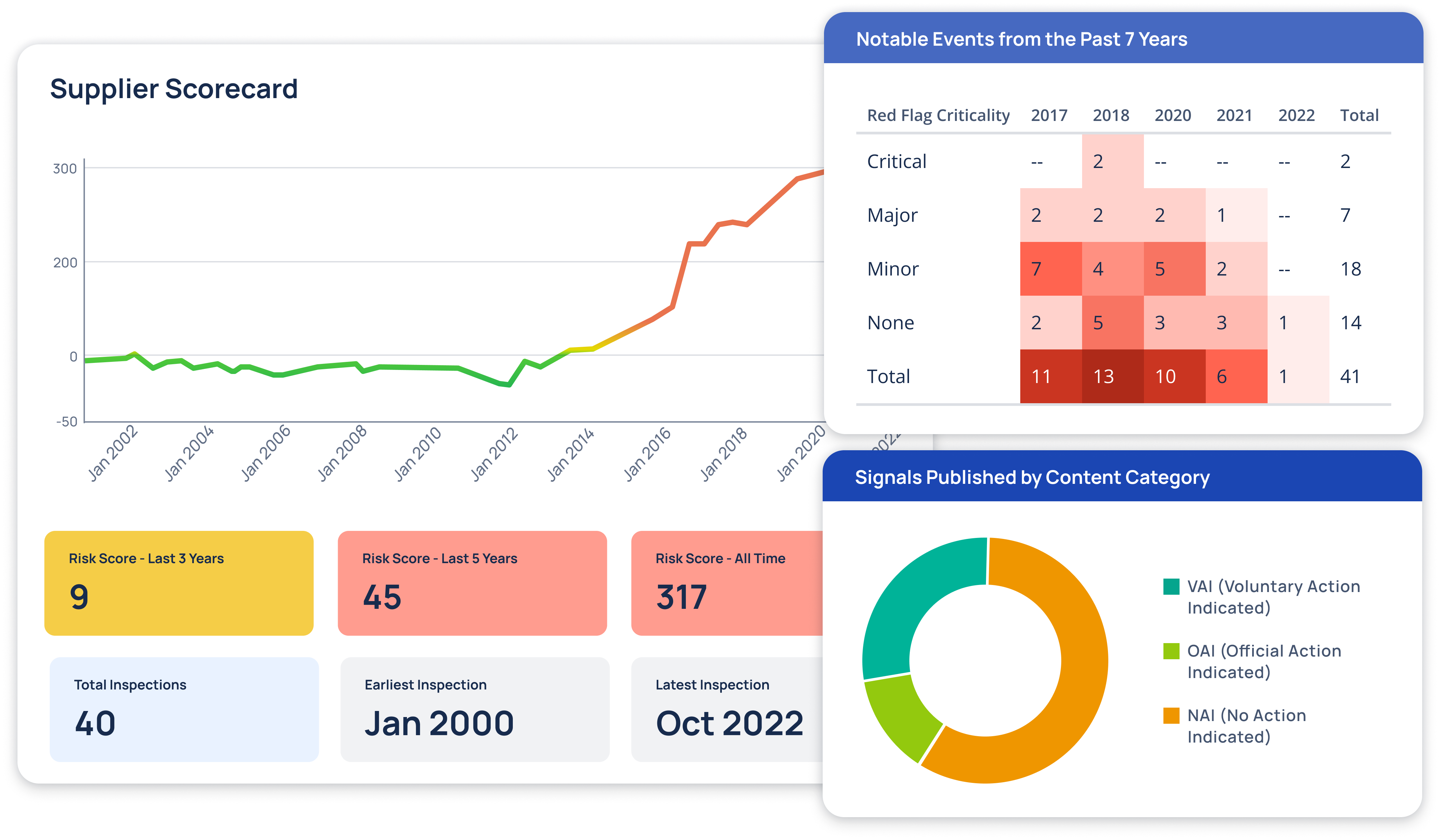
Supplier Scorecard Dashboard showing risk scores, inspection data, and regulatory events timeline

Global Regulatory Intelligence

Interactive mapping of regulatory signals across regions, industries, and compliance categories
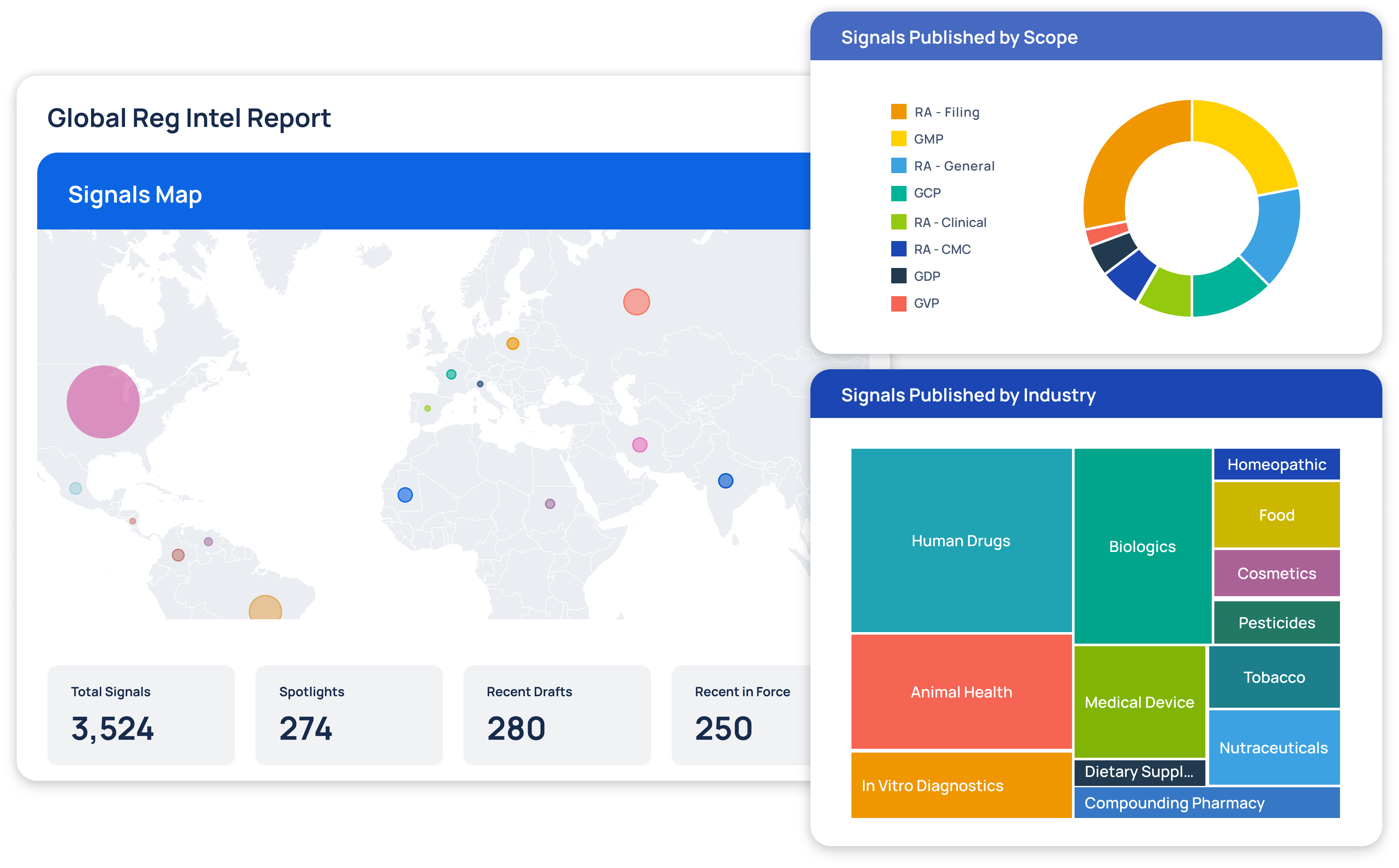
Global Regulatory Intelligence dashboard with world map, signal categorization, and industry breakdowns

Inspection Trends & Patterns

Advanced analytics revealing inspection patterns, compliance trends, and predictive risk indicators
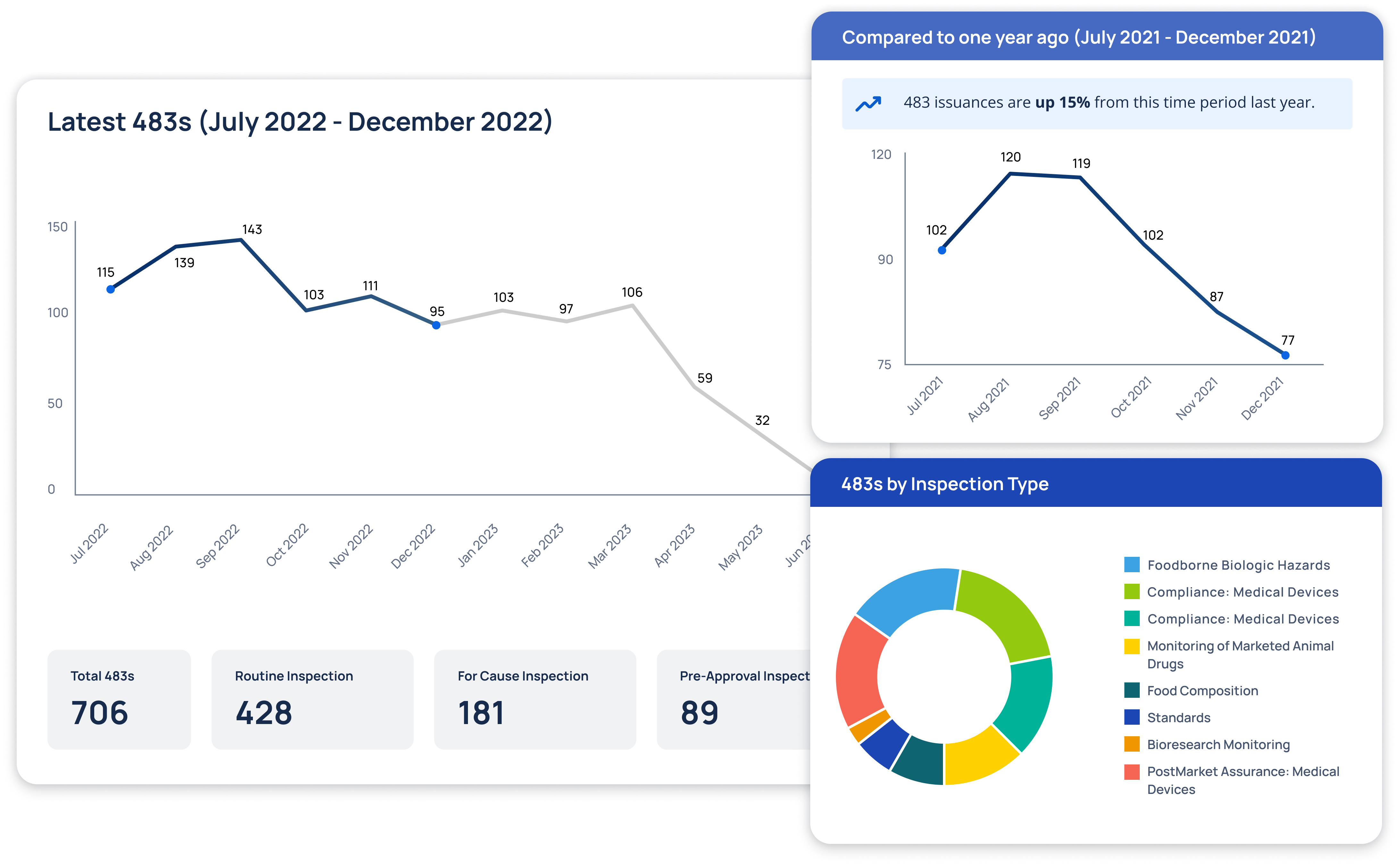
Inspection trends dashboard showing 483 issuances, compliance patterns, and inspection type breakdowns
62,418
Total Nodes
Connected data points
214,786
Relationships
Intelligent connections
273ms
Query Response
Median latency

The Problem

Redica had excellent inspection data that was structured, clean, and trusted by top pharma companies. However, their regulatory intelligence product was still in early stages with limited structure and no connections to other data sources.

The challenge was taking a disorganized collection of guidance documents, warning letters, and enforcement actions and making it genuinely useful. Users needed more than just search capability; they needed to navigate relationships and understand context across regulatory activity, inspections, and risk patterns. QA, compliance, and strategy teams needed to spot trends before they became problems.

Customers didn't want a list of 483s or a PDF dump of new guidance. They needed to answer questions like:

  • What sites have been cited for data integrity in the last 12 months?
  • What recent guidance touches on that topic?
  • Are there patterns across regions, product types, or regulators?
  • Which CDMOs are exposed based on those trends?

The individual pieces of data existed, but the meaningful relationships between them didn't. Our goal was to build those connections systematically at scale.

What We Built

πŸ”— Graph Topology View

Most systems pile on more data. We focused on surfacing what matters and how it’s connected.

214,786
Connected Relationships
Total Nodes 62,418
Connected data points
Avg. Relationships/Node 18.7
Dense interconnections
Top Connected Node Types:
Regulatory Topic β†’ Document 47.3 avg links
Site β†’ Inspection Finding 31.8 avg links
Manufacturer β†’ Enforcement 24.6 avg links
Document β†’ Reg Authority 19.2 avg links
Site β†’ Regulatory Topic 15.7 avg inferred

We began by identifying the core entities that regulatory teams care about:

Sites
Inspection findings
Documents
Regulatory topics
Regulatory bodies
Manufacturers
Enforcement actions

Each entity included relevant metadata, and every connection had provenance tracking and confidence weighting. We used GPT-4o to identify potential relationships, LangChain to process and chunk lengthy documents, and Neo4j for graph storage and traversal. I collaborated with the engineering team on schema design and worked on the user experience to help people explore these relationships without feeling overwhelmed.

Technology Stack

GPT-4o
Relationship extraction
LangChain
Document processing
Neo4j
Graph storage & traversal

How We Used GPT-4o at Redica

Practical AI applications that improved daily workflows

The graph provided the underlying structure, while GPT-4o helped us extract meaningful insights from inspections, enforcement actions, and regulatory documents. We focused on reducing noise, minimizing manual work, and helping users find relevant answers more efficiently.

1. Chat with an inspection or a document

Most of Redica's users aren't searching for PDFs. They're trying to answer questions.

What was the root cause in this 483?
How does this compare to similar findings across sites?
What does current EMA guidance say about this issue?

We added chat to any node in the graph. You could open an inspection or guidance doc and ask a real question. The model used the graph context and source text to give a useful answer, with references. No magic. Just fast access to information that mattered.

2. Summarization and translation for regulatory docs

A lot of documents in Redica had no summaries. Many weren't in English. That slowed everything down.

We used GPT-4o to fix both.

Every document now has a clear, scoped summary that regulatory teams can scan quickly. If the original language wasn't English, we translated it. If it lacked metadata, we filled it in with topic and geography. We gave users a reason to open the document instead of skipping it.

3. AI-assisted link discovery

Regulatory documents often have genuine relationships that aren't obvious from their titles or surface content.

We used GPT-4o to identify meaningful connections that weren't apparent through keyword matching alone. For example, an FDA observation about inadequate process control could be linked to EMA guidance on aseptic processing. They covered similar regulatory themes but used different terminology. Traditional search might miss these connections, but the model could identify the conceptual relationships.

These connections appeared as "related guidance" or "related inspections" in the interface, providing users with relevant context without requiring them to know specific search terms.

4. Auto-generated site risk briefings

Customers spend hours compiling reports before audits or internal reviews. They pull citations manually, summarize findings, and guess what context to include. We built a tool that does most of that for them.

You enter a site or manufacturer. It pulls in relevant inspections, observations, enforcement actions, linked documents, and guidance. Then it assembles a briefing that's actually readable. Structured. Reviewable. Editable.

It doesn't replace judgment. It just saves the team from doing the same work over and over.

My Role

Schema Design

Defined schema alongside engineering and data science teams

Requirements Mapping

Mapped product requirements to user-facing features and model evaluation

Evaluation Metrics

Set evaluation metrics: recall of relevant nodes, user task completion, query latency

Customer Research

Prioritized development based on customer interviews and feedback

Feedback Loop

Built feedback loop with SMEs to validate edge accuracy and reduce false positives

API Contracts

Scoped and reviewed API contracts for frontend graph exploration tooling

πŸ“† Timeline of Linked Events

Regulatory teams can now see when new documents signal changes in inspection behavior

March 2024
Peak Event Cluster
β€’ 127 new FDA warning letters
β€’ 43 major EU guidance updates
August 2023
Guidance β†’ Inspection Correlation
β€’ 89 EMA documents published
β€’ 312 inspection findings (sterility guidelines)
Average Lag
46 Days
Guidance β†’ Observation
Guidance-Linked Observations 87%
Within 90-day window
High-Signal Document Types
EMA Q&A Updates 4.7x
FDA Draft Guidance 3.2x
Lead Time Advantage
Regulatory teams can now prepare for inspection behavior changes before they happen

Results

60k+
Nodes

Across 5 core object types

200k+
Relationships

Connected intelligence

300ms
Query Response

Median after optimization

3-4x
More Context

vs keyword search

3
Enterprise Deals

Closed in 6 weeks

100%
Cross-Regional

Guidance links surfaced

πŸ” Regulatory Complexity Analysis

Cross-jurisdictional intelligence reveals hidden regulatory patterns and precedent connections

Multi-Jurisdictional Coverage
FDA (US) 12,847 linked docs
Highest cross-reference density
EMA (EU) 9,234 linked docs
Strong harmonization signals
Health Canada 4,567 linked docs
ICH alignment patterns
PMDA (Japan) 3,892 linked docs
Emerging convergence
73%
Cross-Authority Citations
Documents referencing multiple jurisdictions
Topic Interconnection Density
Data Integrity
847 links
CAPA Systems
692 links
Supply Chain
578 links
Sterility
434 links
Process Valid.
389 links
Cleaning Valid.
356 links
Labeling
267 links
Facilities
234 links
Equipment
198 links
High Complexity Medium Lower
Regulatory Intelligence
Surface cross-jurisdictional patterns and precedent relationships that drive regulatory strategy

Search vs Graph Query Comparison

Metric Keyword Search Graph Query
Avg. relevant docs found 5.7 11.2
Time to first insight 3m12s 38s
Tasks completed (SMEs) 54% 92%
# of hops to full context N/A 2.3

βš™οΈ Query and Traversal Metrics

Fast, deep, and usefulβ€”the graph changes how users get work done

273ms
Median Query Latency
Post-cache optimization
2.1
Traversal Depth
Median hops to context
Top Query Types
Site β†’ Topic β†’ Document
Manufacturer β†’ Enforcement β†’ Topic
Topic β†’ Guidance β†’ Regulator
Graph-Assisted Tasks vs Manual
12.3x
faster
Risk Heatmap
Manual β†’ Graph
8.7x
citations
QA Briefing
Prep efficiency
94%
auto
Document Reviews
Auto-populated
Infrastructure Impact
The graph changed how teams worked. Less tab-hopping. Fewer manual compilations. More time spent making decisions, not assembling context.

FAQ

What's the tradeoff between speed and graph depth, and how did we handle it?

We limited default traversal depth for common queries and precomputed relationship paths for the most used node types. Redis handled caching. This kept UX responsive without oversimplifying the graph.

How did we measure graph quality in a non-technical domain?

We had regulatory experts from top pharma companies on staff. They reviewed relationships directly. If a link didn’t hold up, it was removed. We didn’t pad counts or chase novelty. The graph had to reflect reality.

We also built feedback tools into the product. Early on, we weighted input from a trusted group of power users. They knew the space and gave direct, actionable feedback. It helped us catch weak connections and keep the signal clean.

What's next?

Plugging the graph into dynamic monitoring. Trigger alerts when new documents strengthen risk signals for a known site. We already started work on query-driven workflows and narrative explanations on top of the graph engine.

Intelligence Transformed

We turned a disconnected regulatory corpus into a navigable graph with provenance. Guidance, inspections, enforcement actions, and CFRs linked in one place.

Users stopped guessing keywords and hopping tools. From a citation to a finding to related guidance in a few clicks. Time to first insight 3m12s→38s. SME task completion 54%→92%.

Teams could track issues across sites and regions and prep for audits without copying data by hand. It reflected how people actually work and what they need to move faster and make better decisions.

Ship a knowledge graph that reduces time to insight.

I’ll help you define objects and relationships, set evaluation, and use LLMs where it adds value. If you have volume and messy text, we can scope a pilot in ~4-8 weeks and measure time to insight and task completion.

Talk About Your Data
R
Redica Systems
Regulatory Intelligence Platform
Learn more at redica.com